
John Steven Lindsay

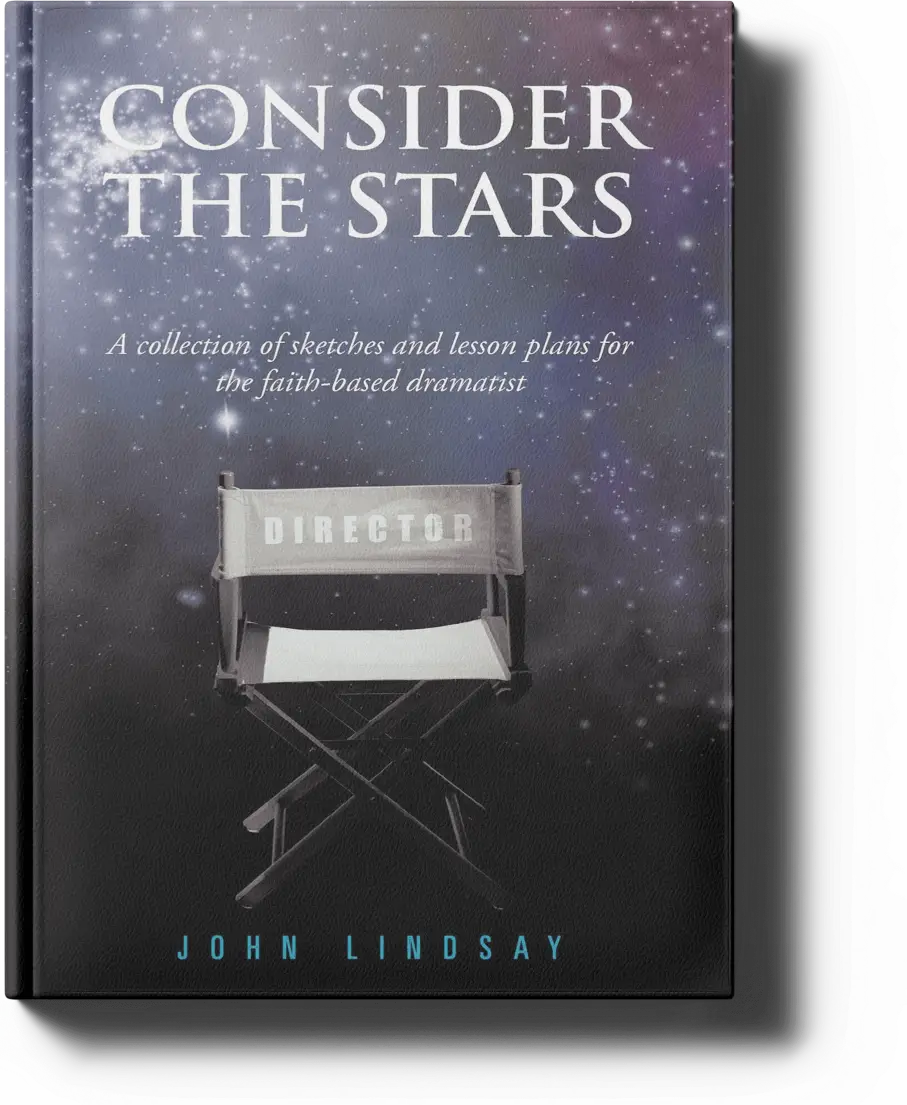
Consider the
Stars
Learn more
ABout the Book
Amazon
citi of books
Why Use Drama to Teach Moral Principles?
Two Letters on Consider the Stars
Written in the voices of C. S. Lewis and J. R. R. Tolkien, in response to the collection by John Steven Lindsay — pastiche composed with care, drawing on positions each man genuinely held and the way each actually wrote to correspondents about manuscripts.
C. S. Lewis

from
J. R. R. Tolkien
from
John Steven Lindsay
Meet the author

check out my photos during my early years in entertainment career
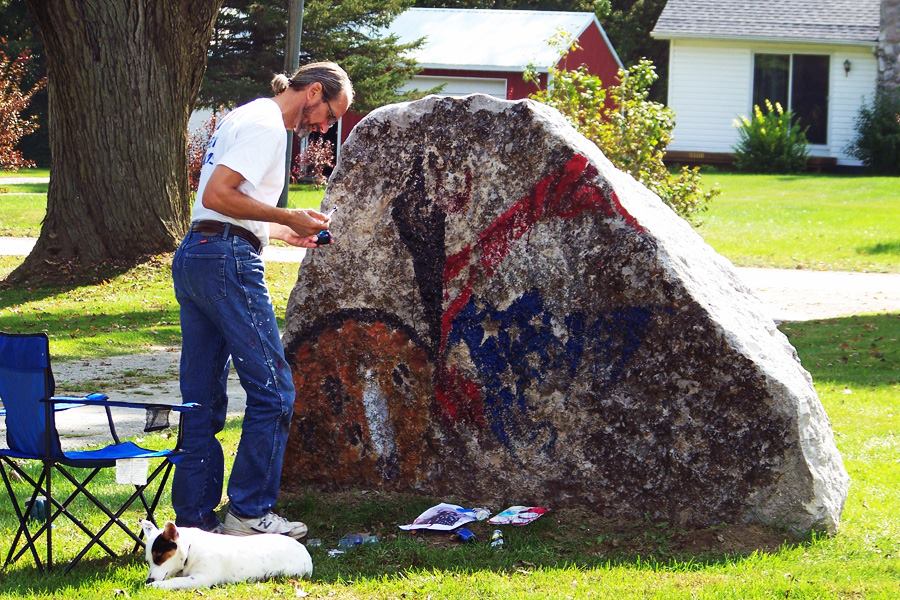
Not AI Generated
These photos show a progression of a mural I painted to confirm my illustrations, books, music, etc. are not AI generated.



We'd Love to Hear From You
Have a question about Consider the Stars? Are you interested in using the book for your church, youth group, Bible study, or Christian drama ministry?
Whether you would like to learn more about the book, connect with the author, or share how the stories have encouraged your group, we welcome your message.
© 2026 John Steven Lindsay | Published in CITI OF BOOKS
John Lindsay

Home
Books ↓
Children's Book and stories
Musical
Plays
Music
author
contact
The Kilns,
Headington Quarry,
Oxford
Dear Lindsay,
Thank you for the typescript of Consider the Stars, which I have now read entire — sketches, scriptural apparatus, acting lessons and all. You ask for my honest judgment, and as you have been honest enough to put the work before live congregations (hundreds of times, you say, which is more than most playwrights can claim and more than most critics could survive), you shall have honesty in return. A man who has faced a church basement full of restless children on a Wednesday night has earned better than flattery.
Let me begin with what is right, because a good deal is.
The bookstore sketch is the best thing in the book, and I will tell you precisely why. When your shopkeeper slips the gold cross into the grumbling man's pocket, and he comes storming back to return it, and she will not sell it to him — “There are some things you can't put a price tag on without devaluing” — you have done in five minutes of stage business what whole shelves of apologetics labor to do. The man's protest, “Because no one ever has? I wouldn't do it,” is the natural heart speaking exactly as it does speak. Grace is the one thing the world cannot believe in because the world has never once practiced it, and you have made an audience feel that incredulity before you resolve it. That is drama doing what only drama can do. The sermon could assert it; your sketch makes it happen to a man in an overcoat while we watch.
I am fond, too, of your laundry. Do not smile; I mean it. The sweater and the tee-shirt arguing in the wash is the homeliest conceit in the collection and therefore among the truest. We are far more like washing than we like to admit, and the line “You don't clean something you hate. You put it through the agitator because you want to wear it again” is sound theology in working clothes. The agitation of the saints has rarely been put more cheerfully. When allegory announces itself honestly, as yours does, and keeps to objects every charwoman knows, it does no harm and much good.
And your Faith Bank has real teeth. The teller demanding a request coupon from the man who wants “a little assurance” — who has made his deposits, taken his notes every Sunday, and never asked for anything — is satire aimed where satire ought to aim: at the reader's own chest. We have all stood at that counter. Keep the aim there. Satire goes bad the moment it lets the audience feel it is about other people; the congregation must leave feeling searched, not congratulated.
Now for the surgery, and I shall number the incisions as I do for all my correspondents who write.
1. Beware the topical. Your Sherlock Holmes vignette puts the A.C.L.U. in the dock, and elsewhere I find jokes about television personalities and even an American election. Nothing dates so fast as the morning paper. The devil you are hunting in that sketch — the strategy of making evil invisible by making God unfashionable — is permanent and well worth hunting; the particular litigants of one decade are not. Write for the parish hall of thirty years hence. The Pharisees will still be in business; the acronyms will have changed. Every line you nail to the calendar dies with the calendar.
2. When the story has preached, stop preaching. In several sketches a character pauses to explain the moral the action has just demonstrated — your shopkeeper tells the man what his parking habits mean, your concrete contractor summarizes the foundation lesson the dialogue already built. Trust the donkey to carry the load; do not also describe the load to the donkey. The moment explanation begins, the audience knows the play has ended and the sermon commenced, and they forgive a play many things they will not forgive a sermon. Where you resist this — the gold cross needs no commentary at all — the work is strongest.
3. On putting words in Our Lord's mouth: you have attempted in the Contemporary Last Supper what Miss Sayers attempted on the wireless, and which I publicly defended and privately reread with profit every Holy Week, so you will get no scolding from me for the attempt itself. The thing can be lawfully done. But it must be done under a rule: let invention carry the stage business and let Scripture carry the doctrine.
4. The Authorised Version. You have used it throughout, and I understand the loyalty. But beauty can lull. The very music of those cadences sometimes prevents the words from striking a modern hearer as words at all — they pass over him like a venerable weather. In your study notes at least, where you are already glossing the Greek and Hebrew (and your glosses are good — your remark that walking in integrity implies progression where standing would not, is precisely the kind of attention I like), consider letting a plain modern rendering land the blow.
5. Small matters of diction, since you ask for craft: prefer the plain word; never tell the audience a thing is wonderful when you can make them say “wonderful” themselves; and do not let a character use a word too big for his feeling, for then when something truly big arrives you will have nothing left to pay it with.
I close with this. Your acting lessons contain a sentence worth the price of the book: that believe is a transitive verb — that no one merely believes, but believes in something, and that whatever we place our faith in empowers us. Quite so. Faith is not a mood but a trust reposed in a Person, and a man who has grasped that grammatically has grasped it theologically. The world does not chiefly need more books labelled Christian; it needs more Christians making honest work — plays, ledgers, dinners, sketches for church basements — to the glory of God. Yours smells of the workshop and the parish hall, which is exactly the right smell. Better one sketch played truly before forty souls than ten lectures on the theory of drama.
Go on with it, and may God speed the work.
Yours sincerely,
C. S. Lewis
76 Sandfield Road,
Headington, Oxford
Dear Mr. Lindsay,
I must begin, as I usually must, with an apology. Your typescript has sat upon my desk beneath a sediment of proofs and unanswered correspondence for longer than courtesy allows, and the delay is the more discourteous because I have in fact read it — the whole of it once, and the verse-tale of Rachel three times, which will tell you something before I have said anything.
A second apology, or rather a caution, before I proceed: you have sent your sketches to the wrong tribunal, and in fairness you ought to know it. I have small love of Drama, and I have said in print why: the stage is anthropocentric, it does ill what narrative does well, and Fantasy especially withers under the lights, where every marvel must be either machinery or a man in a costume. And worse for your purposes: I cordially dislike allegory in all its manifestations, and have done so ever since I grew old and wary enough to detect its presence. So when I tell you what follows, weigh it as you would weigh a fishmonger's opinion of your roses. He may yet notice a worm.
Now to the matter, and first to a point of unexpected and genuine kinship. You say in your Introduction that many of these works were named before they were written. I sat up at that, for it has always been so with me: to me a name comes first and the story follows. A true name is not a label pasted on afterwards but a seed, and the tale grows out of it as out of the leaf-mould of the mind. That you know this — that you waited upon the name in faith before the thing existed — inclines me to take your work more seriously than its modest dress might suggest. Your title also is well found. Abraham was bidden to count what could not be counted, and believed; and there is no better emblem for the maker who begins a work he will not live to see bear fruit.
Rachel's Song is the best of the collection, and it is no accident that it is the one cast as a tale in verse rather than a play. The shape is old and sound: the proud craftsman who answers a child's gifts with masterworks and laughter, and is conquered not by better craft but by a true song; the giver who gets nothing and gains everything; the sudden turn at the end by which the old man's last years become his best. That turn — the joy that comes when all seems concluded in loss — is the thing I prize above all others in stories, and I have elsewhere been driven to invent an ugly word for it, for which I apologize and which I will not repeat here. You have it honestly: the grace does not cancel the old man's wasted years, it redeems them, which is a different and far more difficult thing. But now the niggle, for I am incapable of withholding it: your metre limps. “He gave to the unenlightened and poor, relinquishing control when life was so sure” asks the voice to sprint and stumble in the same breath. Rhyme is a servant, and yours is sometimes permitted to drive the cart. Read every couplet aloud, beat the stresses on the table with your finger, and where the finger hesitates, the line must be mended. Verse meant for speaking owes the speaker a steady floor.
I am obliged also to make a correction of fact, and I make it the more firmly because your sketch on this very subject is called Foundations. Your concrete-man tells the young couple that Latin is the foundation of English, French, German, Italian and Spanish. It is not. French, Italian and Spanish, yes — they are Latin's daughters. But English and German are Germanic tongues; English took aboard a great cargo of Romance wordstock after 1066, but its bones, its grammar, its hearth-words — home, bread, water, love, God — are Germanic and older than Rome's arrival in Britain. I quite agree that the boy should learn Latin, and for true reasons there are plenty; but a sketch about the peril of building on a flawed foundation must not itself contain one, for the sharp child in the third row will one day discover the crack, and a small crack in a teacher's wall spreads to the whole. Mend this; it is the work of two lines.
Of The Intangibles — your family of virtues walking about under their own names, Mr. Integrity and Mrs. Patience and the rest — you will already have guessed my feeling. It is allegory neat, without water. I will however play fair, as you have: the morality play is an old and honest English form, Everyman is its ancestor, and you smuggle nothing — the audience is told plainly what it is being given, and the cookies are real cookies. My own preference is for the freedom of the reader over the purposed domination of the author: I would always rather a story be applicable — open, so that each hearer finds his own meaning in it — than allegorical, where the meaning is fixed before the curtain rises. And here I must make a confession that costs me something: your laundry pleased me. The sweater is a real sweater, with a real care-tag and a real grievance about the water temperature, and the meaning rises off the garments like steam from the dryer instead of being pinned to them. When the things in a tale remain stubbornly themselves, even an allegorist may be forgiven.
Now to the gravest matter, and I ask you to receive it as it is meant, from one believer to another. In Mary's Message you have set a comic angel beside Gabriel at the Annunciation, and in your Last Supper you have put invented speech into the mouth of Our Lord. I understand the pastoral intent, and your own preface shows you felt the risk — the Velcro wings confess as much. But here is my conviction, and it is the bedrock of everything I have ever made: the Gospels contain the greatest and most complete of all eucatastrophic tales, and this story has entered History; it is true. And that changes everything for the maker. Legend and history have met and fused, and what was once the matter of art became, at one moment in Palestine, fact. Fact is not material to be re-imagined; it is a sovereign to be served. By all means let your art fill the porch and the courtyard — your congregation seated at the table as fishermen and waitresses and laid-off men is a porch well filled, and the instinct behind it (that He chose from the shallow end of the pool, as you put it) is sound and moving. But within the sanctuary, give Him only His own recorded words. You asked, I am told, whether I would receive this work as that of a man continuing in a labor I cared about. I will answer carefully, because careless blessing is no blessing. This is journeyman's work for the parish stage, made with evident faith, performed and mended before living audiences, and offered with its tools showing — the prop lists, the doubling charts, the costume notes — and I have a craftsman's respect for a book that tells you honestly how many suitcases the scene requires. We are not working the same bench, you and I. But we are, I think, in the same workshop, under the same Master, and each of us making by the law in which we're made; and the light we work by comes through the same high window. Mend the metre, mend the Latin, spare the sanctuary, and go on.
With my good wishes for the book and its audiences,
Yours sincerely,
J. R. R. Tolkien

Follies

Resume

Resume 4 comic

Cinderella Crop
